I build systems that scale, ship code that lasts, and chase hard problems.
Math, galaxies, and the road to systems.
I was the kid who loved math before anything else. Then physics, then astrophysics. Galaxies, particle physics, the absurd scales of the universe and the absurd smallness of the things that hold it together. The thing I actually loved was the equations, long, ugly, cascading systems of them, and what falls out when you finally reduce them.
Computer engineering in undergrad was the moment those equations got faster. I could write programs to solve the math I'd been doing by hand and then point them at problems no single notebook could hold. That's where distributed systems hooked me: the same elegance, on a different axis. Raft, gRPC, replicated logs, consensus, the CAP triangle: all of it is just the same question I started with as a kid, asked at a different scale.
NLP, then ML, then everything models can be.
I fell for NLP first: the idea that a sequence of tokens could predict, adapt, summarize, translate, and (eventually) reason. As models got bigger and weirder, I went deeper: how they train, how they fail, how they behave under stress, and what it takes to make a probabilistic service feel like reliable infrastructure.
Today my time goes into the unglamorous half of that work: stress testing models, reducing hallucinations, hosting local companion models that help me ship faster, and building small applications that automate the day-to-day chores I'd otherwise lose hours to. Generative AI gets framed as a replacement story; I think it's the opposite. Models are leverage. Used well, they buy us back the time to do harder science.
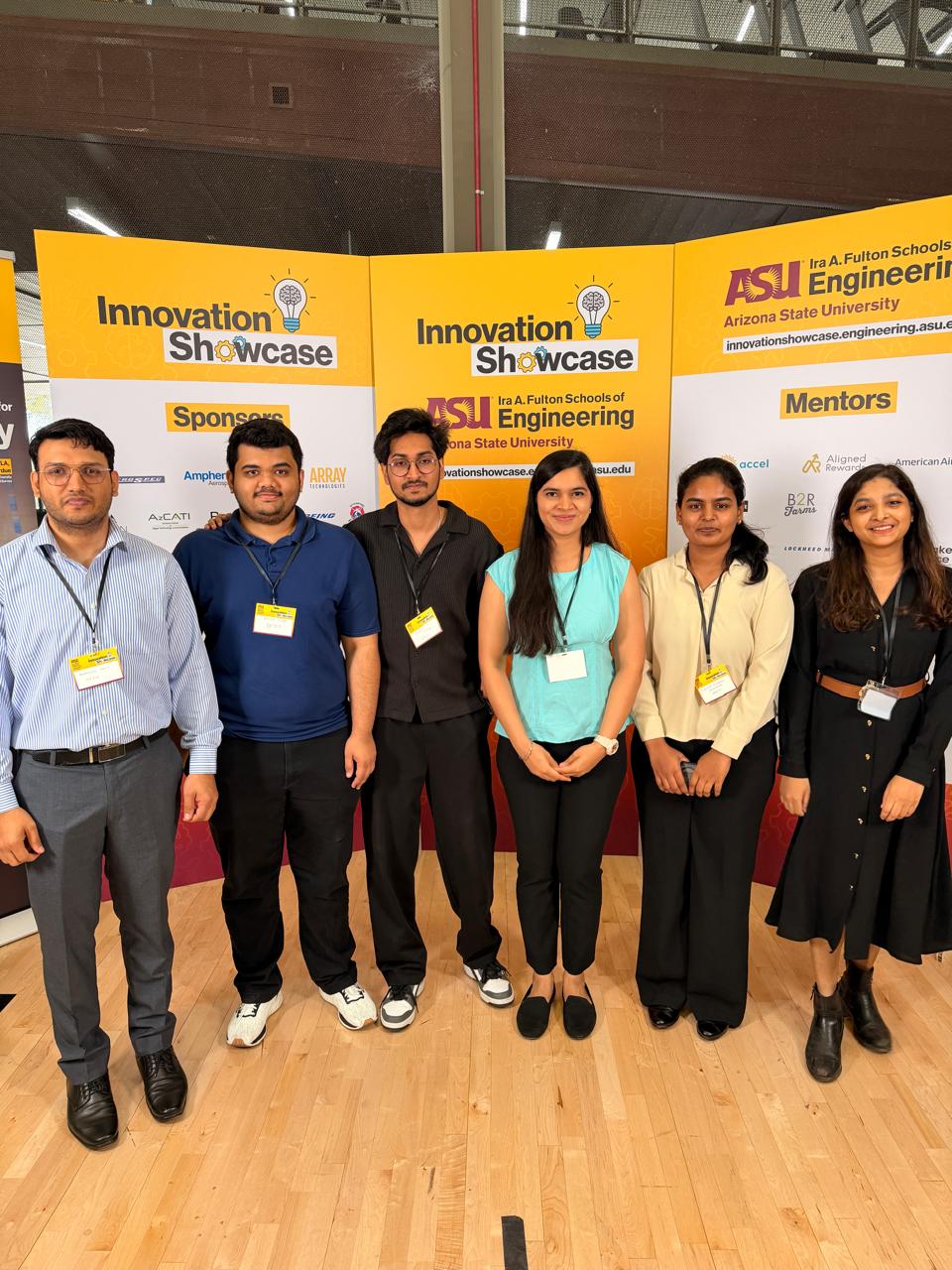
Innovation Showcase, Ira A. Fulton Schools of Engineering.
Demoed the METY Legal QnA pipeline to ASU faculty, industry judges, and MyEdMaster stakeholders at the end-of-semester showcase. The whole 6-person team made it out for one photo with the banner, that's us. A semester of compressed work that landed as the production pilot.
Optimization is a habit I keep losing sleep over, and winning back.
I started in undergrad as plain interview prep and never stopped. C++ for the tight stuff: the kind of problems where you fight for milliseconds and constant factors. Python when I just need an answer fast. The point of the habit was never the badges; it was learning to spot the second-best solution and refuse to ship it.
On HackerRank that's shown up as gold badges in Algorithms, Data Structures, and Problem Solving. On LeetCode, my contest rating sits at 2059, placing me in the top 1.91% of competitive solvers globally. The habit is the point.
// My defaults when starting a new project

export const principles = {
  innovation:   'first ask if the problem itself is the right one',
  reliability:   'design for failure modes first',
  simplicity:    'fewer moving parts > more abstractions',
  observability: 'if you cant trace it, you cant fix it',
  cost:          'cheap by default, expensive on purpose',
  research:      'cite well, replicate before improving',
}

// innovation comes first.
// the rest are how to ship it without breaking things.Off one keyboard I'm usually on a different one, Valorant and Apex Legends are the games I keep coming back to. First esports love was Sentinels when they had TenZ and Shroud; these days I don't lock in on any one org and just root for NA as a region. Outside the screen I play golf (badly, with conviction), pickup FPS in any form, and soccer when I can find a field.
Slow miles outdoors, usually with people I love.
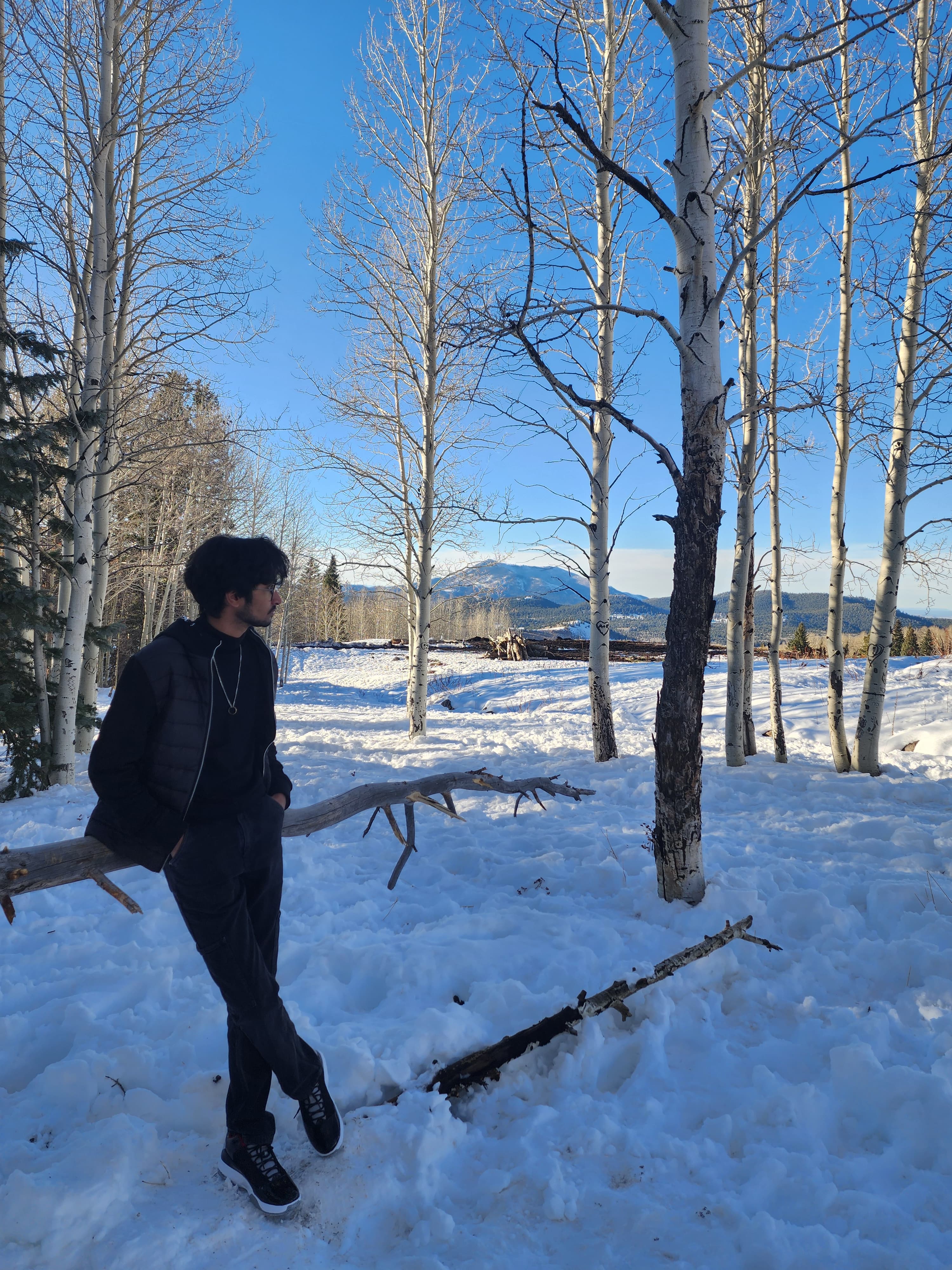
Last Thanksgiving we drove up to Flagstaff and Sedona for the first proper snow of the year. Red rocks on the way up, white trees on the way back, and that one window of golden hour where everything looks like it's been color-graded for you.
The kind of trip where you forget you ever owned a laptop.
Closer to home it's the Memphis Zoo on a slow Sunday, or the Botanical Garden when whatever's in bloom is in bloom. Nothing about it is aspirational, just walking around, taking too many photos of the same flowers, eating something we'll regret later.
I think you can tell a lot about a person by how they spend an empty Sunday. Mine usually ends up outside.
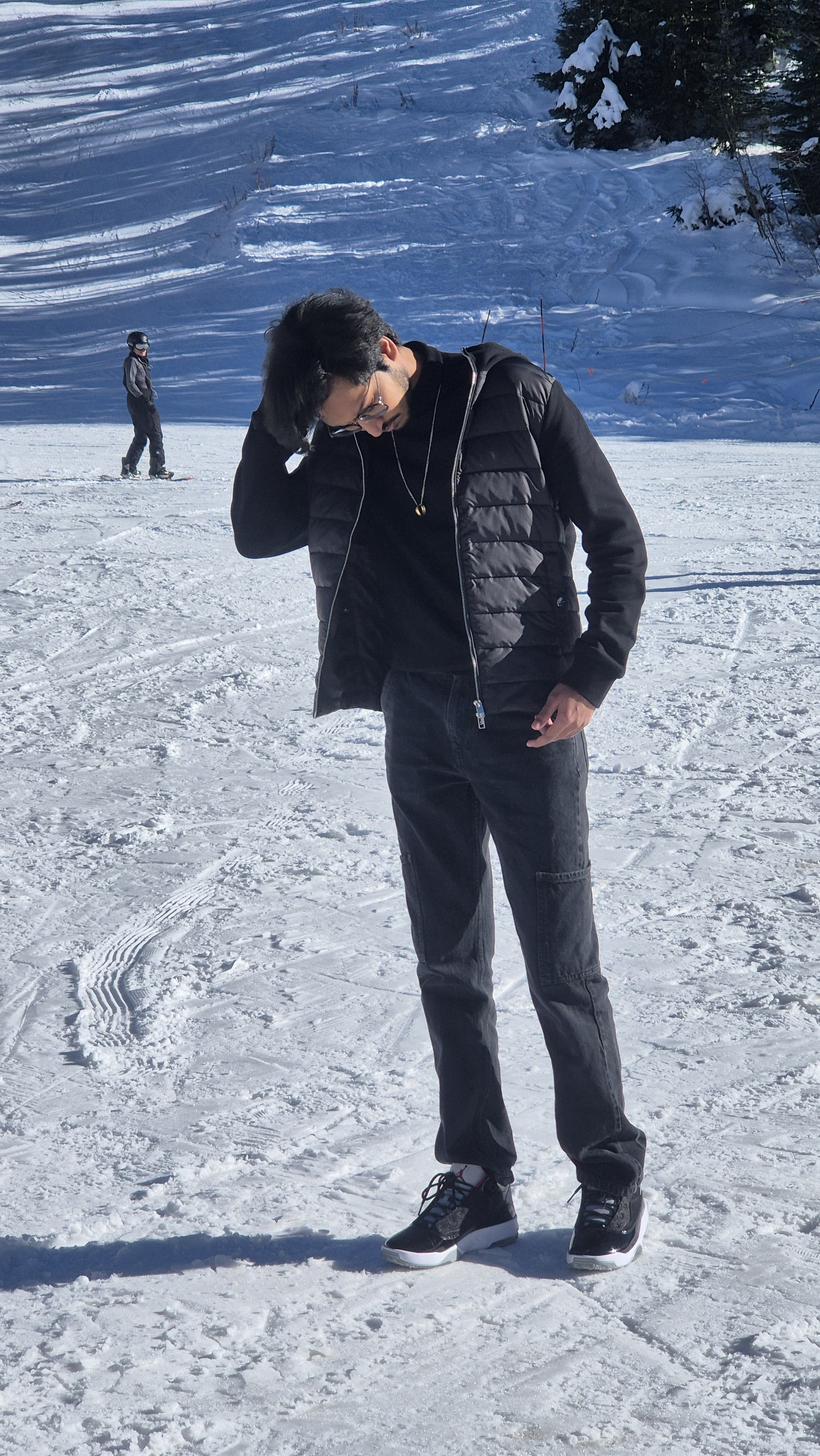
I'm a hopeless beginner on a snowboard and a slightly less hopeless beginner on skis. Doesn't matter. The lift line is where half my best conversations happen.
Most of these are with friends and my better half, who has better camera instincts than I'll ever have.
Graduated May 2026 from ASU and actively interviewing for full-time SDE/MLE roles where I can ship reliability infrastructure or applied-ML systems at scale. In the meantime: stress-testing models, chasing hallucinations down, building small daily-use applications, and self-hosting local companion models that pair-program with me while I work.
I'm best reached by email. I read everything I get sent and I'm a quick reply if there's a real reason to talk.
Say hi ↗